

If you are thinking about an affair, you may want affection, privacy, desire, recognition or relief from a relationship that is not working. Notice what you want before asking a new person to resolve it.
An affair usually means acting outside an agreement while keeping the other person in the dark. You can decide whether to try repair, discuss a different agreement or end the relationship. If fear or abuse is present, seek independent support before any joint conversation.
On this page
1. Name what you want in concrete terms
What would change if the need were met? Perhaps you want time together without distractions, touch you both welcome, more space or a chance to make your own decisions. Write one sentence about the need before deciding how to act.
If you are reflecting on closeness, Artso Net’s article on intimate connection offers another perspective. In your own relationship, ask directly about what each person wants and can offer.

2. Check what you have actually agreed to
Consider what both of you understood about exclusivity, sexual contact and emotional commitments. If the agreement is unclear, ask before acting where it is safe to do so. Clarifying the agreement lets both people make informed choices.
Consensual nonmonogamy depends on freely made agreements. You can suggest it, and your partner can decline. A new agreement cannot provide consent for a secret action that already happened.
3. Choose between repair, a different agreement and leaving
If you want to repair a safe relationship, ask for one specific change. “Could we make time to talk about how close or distant we’ve felt lately?” invites a conversation without demanding that someone meet every need.
If you want a different relationship structure, say what you would like and listen to the other person’s answer. If no agreement fits, ending the relationship is a choice. Practical responsibilities may need separate planning and support.
4. Talk about illness or disability with respect
Illness, disability and caregiving can change how people share time, energy and physical intimacy. Ask what each person wants, what feels accessible and whether outside support would make daily life more manageable. A disabled partner still has preferences and a say.
You can ask for support with caregiving, discuss forms of closeness you both enjoy or consider what you can realistically continue. Each person’s choices still matter.
5. Consider everyone affected without predicting their reaction
A person you are attracted to also needs accurate information to make their own choices. Existing partners may have practical or sexual health decisions to make. Avoid asking children or friends to take sides or keep secrets about the relationship.
If you have already acted outside an agreement, pause before making more promises. Where it is safe, take responsibility for your choices. A qualified health professional can advise on sexual health questions if they apply.
6. Put safety ahead of a difficult conversation
If a partner threatens, monitors or controls you, you do not have to confront them privately or rely on a new relationship to leave. A local domestic abuse support service can help you think through your options.
In a safe situation, decide on one next action: ask for a conversation, pause the secret contact while you decide, seek individual advice or plan to end the relationship. Choose what you can do honestly and safely.
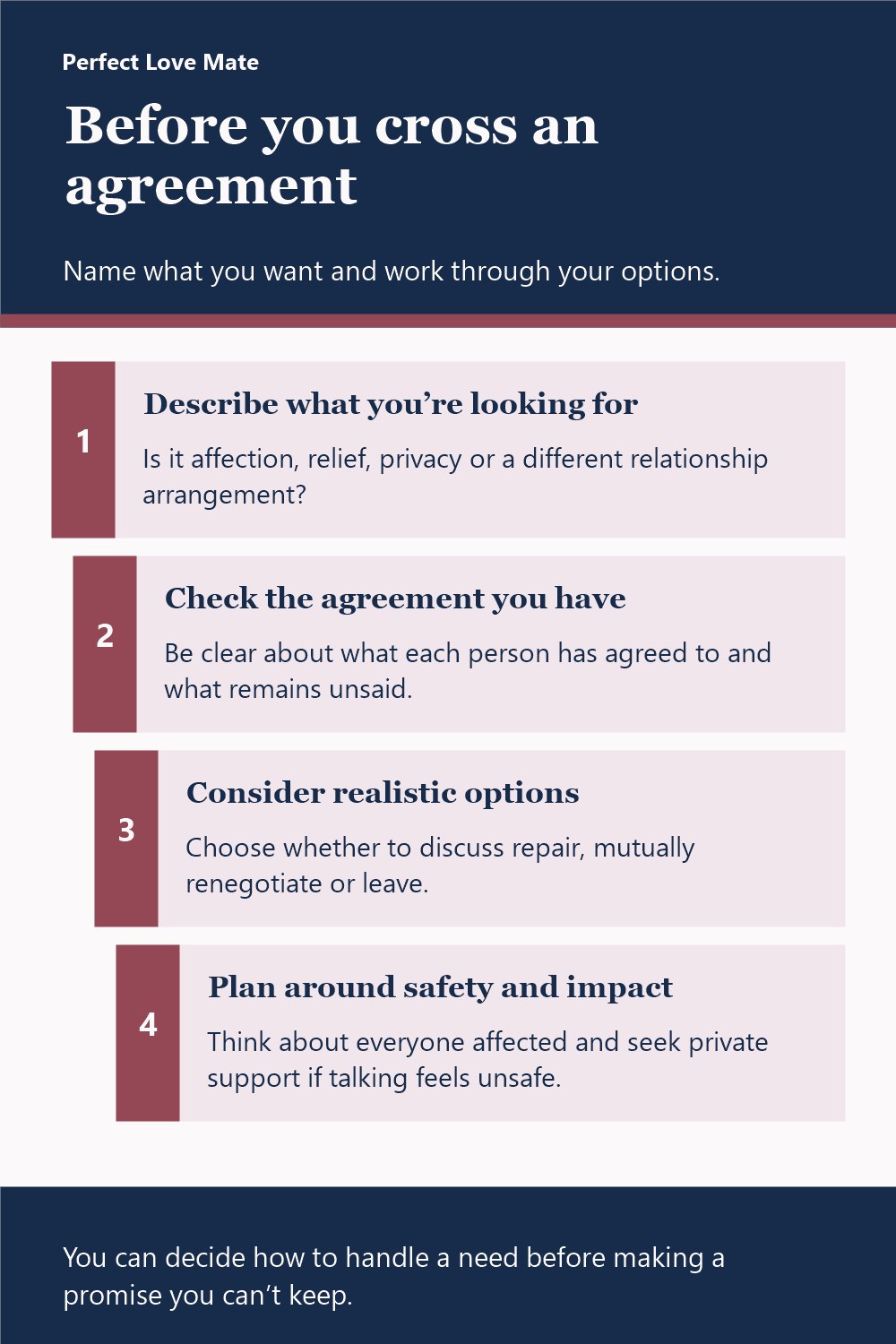
Read the infographic in text
Before you cross an agreement Name what you want and work through your options.
- Describe what you’re looking for Is it affection, relief, privacy or a different relationship arrangement?
- Check the agreement you have Be clear about what each person has agreed to and what remains unsaid.
- Consider realistic options Choose whether to discuss repair, mutually renegotiate or leave.
- Plan around safety and impact Think about everyone affected and seek private support if talking feels unsafe.
You can decide how to handle a need before making a promise you can’t keep.