

If you feel nervous before a first date, try making a plan that leaves fewer things for you to decide in the moment. You can be a little shy, ask for what you need and still enjoy meeting someone. You don’t need to know beforehand how the date will go.
Start with three choices: where you’d feel comfortable, how much time you want to give it and what you’d like to find out about the person. A first date can answer one question: would you like to spend more time together?
On this page
1. Pick a place and a time that suit you
Suggest a public place you can reach easily and afford. If loud rooms are hard for you, a café at a quiet hour may work better than a crowded bar. Decide how you’ll get home. If it feels helpful, tell someone you trust where you’ll be.
It’s fine to propose a time limit upfront: “I can meet for coffee at 3, and I’ll need to leave by 4.” That gives you a way to end the date and room to plan another if you both want to.

2. Bring one question and one preference
Think of one thing you’re curious about. “What do you look forward to on a day off?” gives your date space to say what matters to them. Offer your own answer if they ask, and follow the part of the conversation you actually want to hear more about.
Try stating a low-stakes preference early: “Could we sit where it’s quieter?” A considerate response is useful information. If you freeze or change your mind, you can still speak up later.
3. Have a simple way to end the date
You can leave at the time you planned or go earlier if you feel uncomfortable. If you want a line ready, try “I’m going to head home now. Thanks for meeting me.” You don’t owe an explanation for leaving.
If you want to meet again, say so plainly and give the other person time to decide. If you don’t, a brief, kind answer is enough.
4. Notice how you felt after you left
It’s easy to replay the thing you wish you’d said. Make room for a different question: did you feel heard, and did you have space to say what you wanted? Would you be interested in another hour with this person even if you knew they already liked you?
If you want to try something different next time, choose one practical adjustment: an earlier time, a quieter place or a shorter first meeting. One date gives you information about the meeting, not a verdict on your ability to connect.
Read the infographic in text
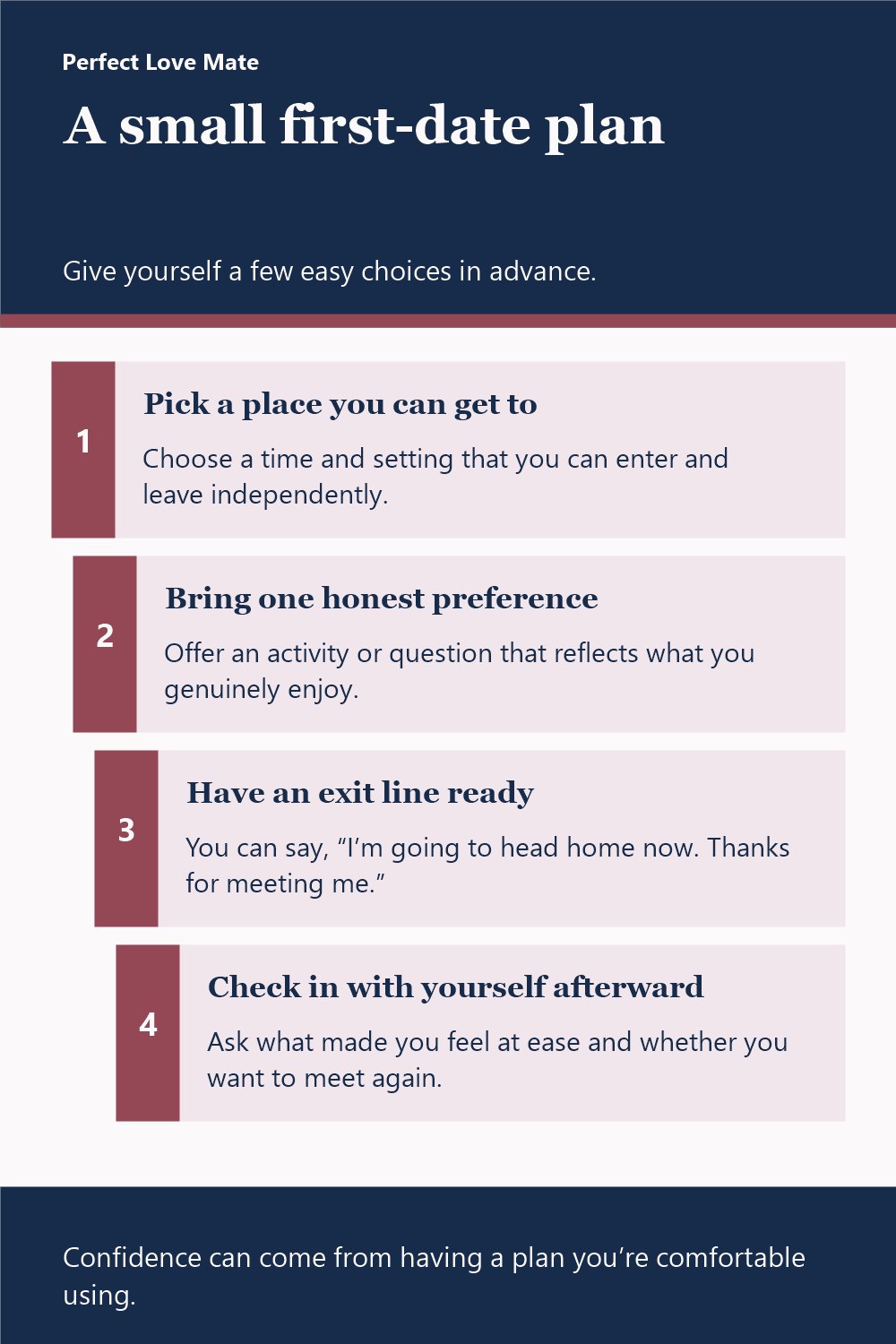
A small first-date plan Give yourself a few easy choices in advance.
- Pick a place you can get to Choose a time and setting that you can enter and leave independently.
- Bring one honest preference Offer an activity or question that reflects what you genuinely enjoy.
- Have an exit line ready You can say, “I’m going to head home now. Thanks for meeting me.”
- Check in with yourself afterward Ask what made you feel at ease and whether you want to meet again.
Confidence can come from having a plan you’re comfortable using.