

If a relationship repeatedly leaves you feeling pressured, dismissed or afraid, start with behavior: what the person does, what changes when you raise a concern, and whether you can make choices freely. You do not have to decide what label fits them.
It is possible to miss someone and still want distance. If you feel afraid of their reaction, focus on independent support and safety before trying to have a frank conversation.
On this page
1. Describe what happened in plain words
Try naming a recent event: “They mocked me in front of friends after I asked them to stop,” or “They demanded my passwords and became angry when I said no.” Concrete descriptions can help you see what you are responding to.
One event may be enough to decide you want distance. You do not have to collect a certain number of examples before taking your discomfort seriously.

2. Distinguish a disagreement from pressure or control
Different plans, communication styles and levels of interest can make a relationship a poor fit. Consider whether both people have room to disagree, ask for change and decide to leave.
The National Domestic Violence Hotline lists warning signs of abuse, including isolation, extreme jealousy and control over money or decisions. Threats, intimidation and pressure about sex deserve attention even when the person is affectionate at other times.
3. Notice what happens when you set a limit
In a relationship where you feel safe, try a concrete limit: “I won’t continue a conversation while I’m being insulted.” Watch whether the behavior changes over time.
If stating a limit could lead to punishment, stalking or violence, you can seek independent support before you make or announce any plans.
4. Keep other people and parts of your life in reach
Tell a trusted person what would help: company, a ride, a place to talk or someone who can check in. You can choose how much you want to share.
If you are worried that devices or accounts are monitored, consider using a safer device or speaking to a support service in person where you can. A local abuse service can help you plan for safety in your circumstances.
5. Choose a next step that fits your safety
Where there is no fear of retaliation, you can end the relationship with a brief message: “I don’t want to continue. Please don’t contact me.” You can also reduce optional contact and make a separate plan for shared obligations.
If you are in immediate danger, contact local emergency services if it is safe to do so. If leaving could bring a dangerous reaction, seek individual support and make a safety plan before approaching the person.
6. Treat mixed feelings with care
A good memory or a later apology does not erase a pattern. You can feel grief, relief, anger or affection after stepping back. If contact makes a situation harder, think about who can support you and what practical limits you can keep.
You can reconsider your choices without blaming yourself for staying or returning. Responsibility for controlling or abusive behavior belongs to the person using it.
Read the infographic in text
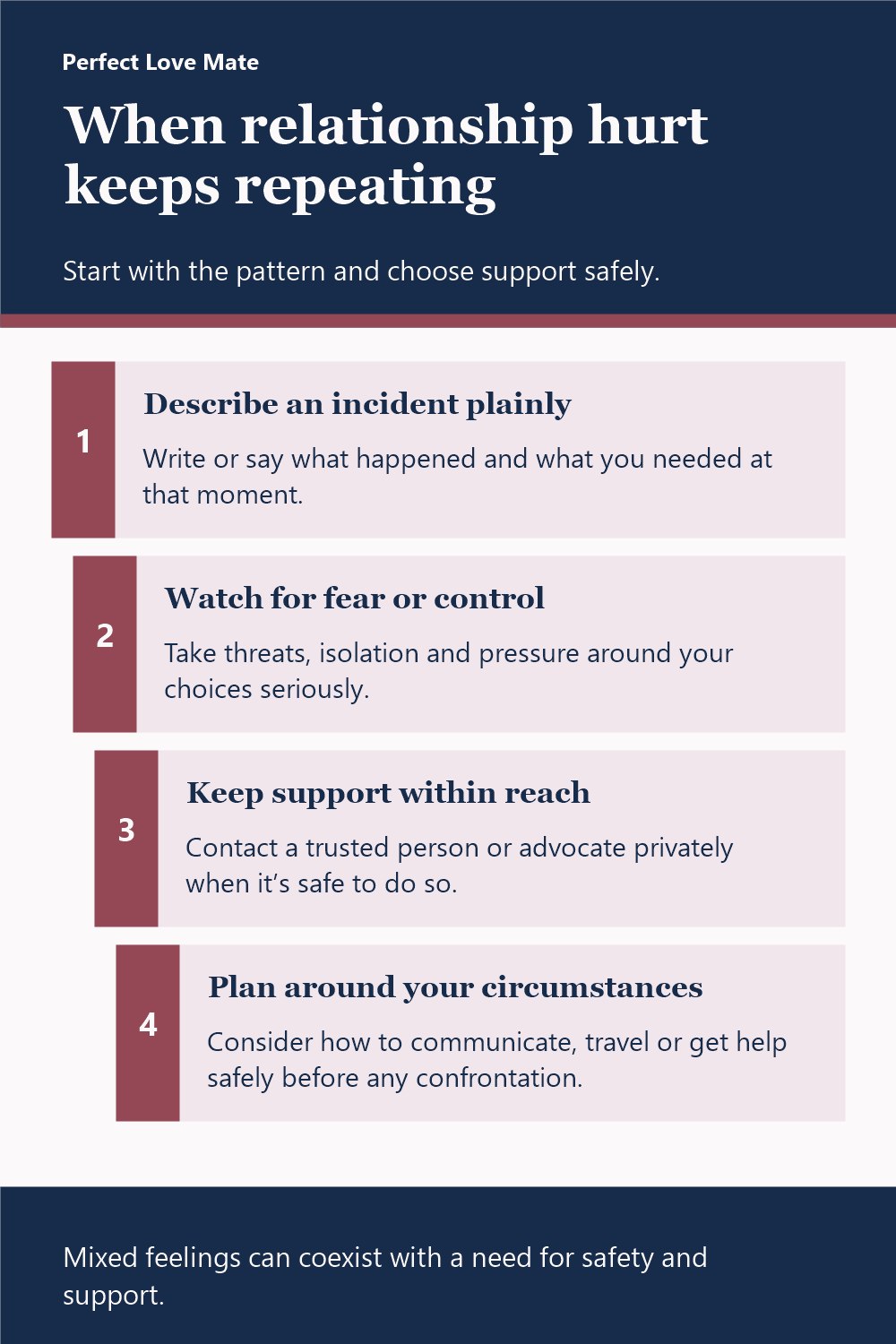
When relationship hurt keeps repeating Start with the pattern and choose support safely.
- Describe an incident plainly Write or say what happened and what you needed at that moment.
- Watch for fear or control Take threats, isolation and pressure around your choices seriously.
- Keep support within reach Contact a trusted person or advocate privately when it’s safe to do so.
- Plan around your circumstances Consider how to communicate, travel or get help safely before any confrontation.
Mixed feelings can coexist with a need for safety and support.