

When someone asks, “Why are you still single?” you can decide how much to share. You may be single by choice, open to dating, taking a break or unsure what you want. Your answer does not have to satisfy someone else’s assumptions.
Pick a response that fits the relationship, the setting and your mood. A quick reply at a family meal can be different from a conversation you choose to have with a close friend.
On this page

1. Give a short answer when you want to move on
Try “I’m happy with my life right now,” “I’m open to dating, and there’s nothing to announce,” or “That’s not something I’m discussing tonight.” Choose wording that is true enough without giving away details you want to keep private.
If you want to redirect, add a real question about something else: “How did your trip go?” You can change the subject without explaining why the previous one was unwelcome.
2. Say more with someone who can listen
A trusted friend might be someone you want to tell, “I would like a relationship, and dating has been discouraging lately. I’d rather be listened to than given tips.” Or you might say, “I like being single and I’d appreciate it if people stopped treating it as temporary.”
You can accept a kind offer of help if you want one. If a friend asks about introductions, specify what would make an introduction welcome, including whether they should check with you first.
3. Repeat a clear boundary if someone persists
You can say, “I’ve answered that. Please stop asking.” If the person turns the question into a running joke, try addressing it outside the group: “I know you may mean it lightly, and I don’t like being singled out that way.”
At a work or family event, you may prefer a quick exit or redirect. You do not owe a public discussion to someone who ignores a private answer.
4. Separate your own wishes from other people’s deadlines
In private, ask what you would want if nobody were asking for an update. You might want a partner, more companionship, time to settle into a new phase of life or no change at all. You can have more than one answer.
If you do want to date, choose one action you can control, such as trying a different way to meet people or clarifying what you want to say in a profile. A lack of dates is not proof that something is wrong with you.
5. Keep a reply ready for the next occasion
Pick one phrase you can remember under pressure. If you are fine talking privately, “I don’t want to talk about that in front of everyone” leaves that choice open. If you want the topic dropped altogether, say so.
Afterward, decide whether you want support, a distraction or a different boundary next time. You get to keep parts of your life private while staying connected to people you care about.
Read the infographic in text
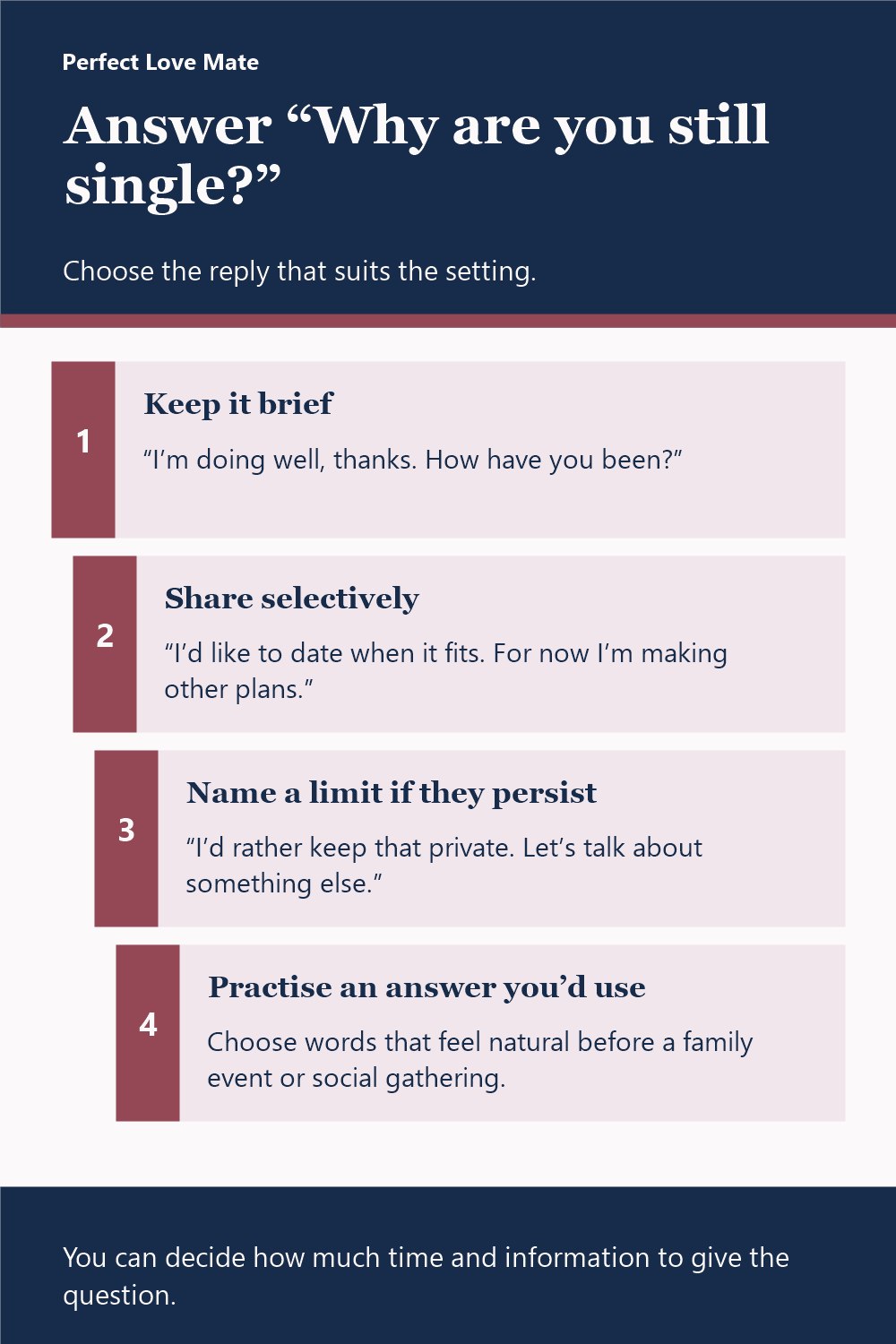
Answer “Why are you still single?” Choose the reply that suits the setting.
- Keep it brief “I’m doing well, thanks. How have you been?”
- Share selectively “I’d like to date when it fits. For now I’m making other plans.”
- Name a limit if they persist “I’d rather keep that private. Let’s talk about something else.”
- Practise an answer you’d use Choose words that feel natural before a family event or social gathering.
You can decide how much time and information to give the question.