

If you want a lasting relationship, get to know how someone acts when plans change, preferences differ and ordinary responsibilities need attention. You can enjoy the early connection while taking time to see how a relationship would fit into both lives.
There is no single path to commitment. Start with what you want now, then talk about the choices that would matter if you decide to build something together.
On this page
1. Name what “lasting” means to you
You might want a committed partnership, marriage, a shared home or a relationship that leaves more independence. Write down a few things you would want both people to agree on before you make a major commitment.
Separate a need from a preference. You may prefer a shared hobby, for example, and need someone who respects time with your friends or wants a compatible kind of commitment.

2. Talk early enough to learn something
You can ask “What kind of relationship are you open to now?” and share your own answer. You do not need to interview someone about their future on date one. If a difference would shape your decision, give it room to come up before you make larger plans.
Listen for what the person can offer in ordinary life. “Maybe someday” may be honest, but it is different from making a plan you both understand.
3. Notice follow-through when plans change
Look at whether both people take initiative, keep agreements and let the other know when something changes. One canceled meeting can have an ordinary explanation; a pattern of avoiding decisions or asking you to do all the work deserves attention.
You can ask about a specific incident without diagnosing a motive. “When plans are left open, I’m not sure whether to set time aside. Can we agree by Thursday?”
4. Try a small shared decision before a large one
Choose something real: how to handle different weekend schedules, what each person can afford to spend on outings, or how often you want to talk between dates. See whether both people can speak honestly and change their minds.
When you consider a bigger step, talk through what it would involve and what each person would need. You can agree on the next step without agreeing to every future one.
5. Check whether you can keep your own life
A relationship can add company and support while leaving room for friends, work, interests and rest. Notice whether you can say no without being punished or repeatedly asked to change your answer.
Ask yourself: Do I want to continue as things actually are? What would I need to see or understand before making a larger commitment? Take your answers seriously, even when the attraction is strong.
Read the infographic in text
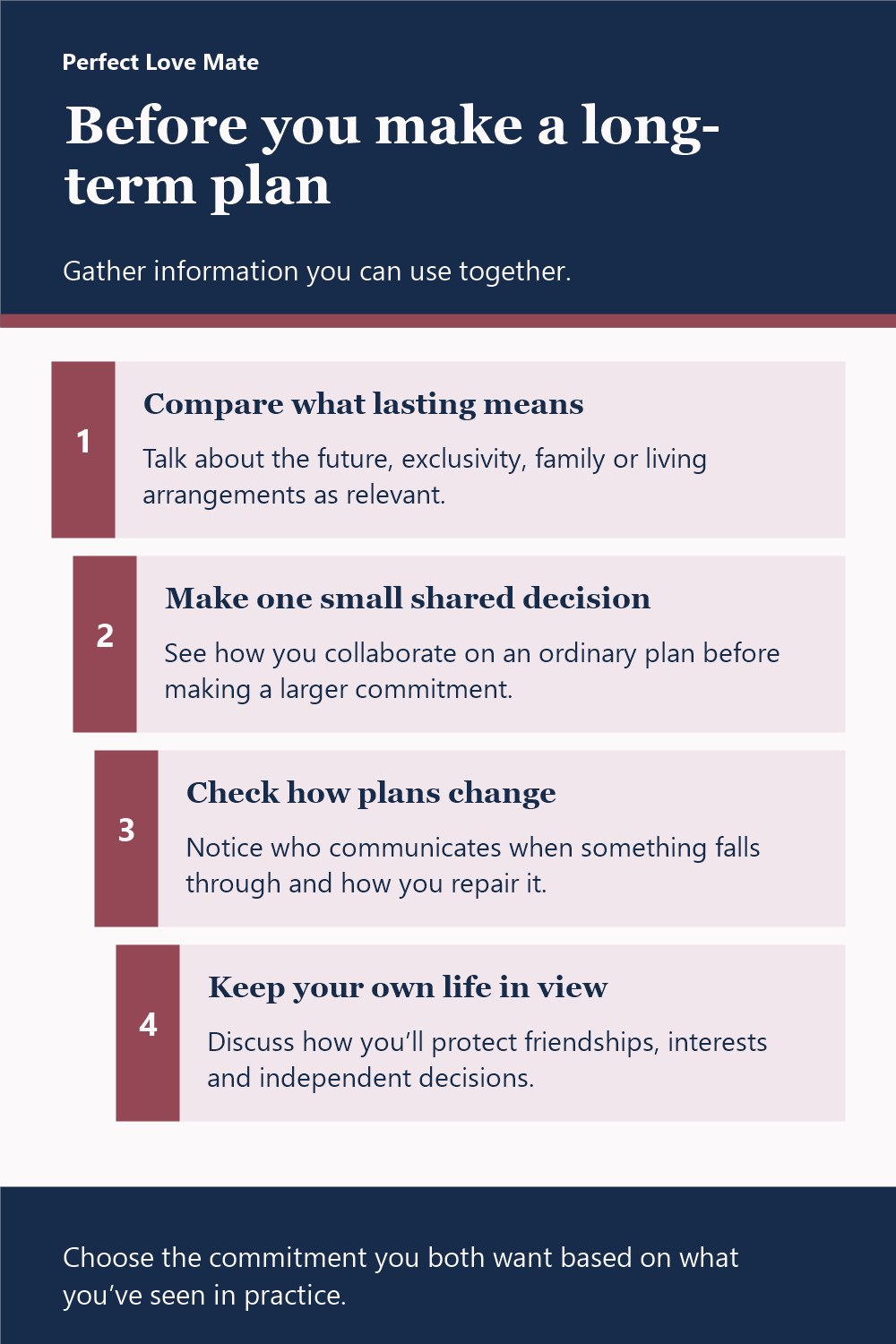
Before you make a long-term plan Gather information you can use together.
- Compare what lasting means Talk about the future, exclusivity, family or living arrangements as relevant.
- Make one small shared decision See how you collaborate on an ordinary plan before making a larger commitment.
- Check how plans change Notice who communicates when something falls through and how you repair it.
- Keep your own life in view Discuss how you’ll protect friendships, interests and independent decisions.
Choose the commitment you both want based on what you’ve seen in practice.