

Sex on a first date is a choice for the adults involved. Waiting is a choice too. Neither decision proves your worth or guarantees that a relationship will follow.
Start with a more useful question: Do I want this experience, with this person, under these circumstances? You can enjoy attraction and still decide to end the evening without sex.
On this page

1. Check what you want before trying to impress someone
Imagine the date ended with no promise of another meeting. Would you still want the sexual experience you are considering? If your answer depends on sex securing commitment, pause and talk about that hope first.
Your values, comfort, faith, curiosity or wish to wait can all inform your pace. You do not need a more impressive explanation, and another person’s timetable does not create a debt.
2. Talk about expectations without promising an outcome
You might say, “I’m interested in you, and I’m looking for a relationship. What are you looking for?” Or, “I’d like to keep seeing you, but I’m not ready for sex tonight.” Listen to the answer and give both people room to choose.
If one person wants a casual encounter and the other hopes it will lead to exclusivity, that difference deserves attention before going further. Talk about exclusivity separately; having sex does not establish it.
3. Make consent an ongoing conversation
Ask what the other person wants and check in as things change. Agreement to kissing is not agreement to every other activity, and a previous yes can become a no. If someone freezes, pulls away, goes quiet or seems unsure, stop and check in.
RAINN explains consent as clear, freely given and ongoing. Someone who is asleep or too intoxicated to make an informed choice cannot consent. Flirting, paying for a meal and going home together do not substitute for agreement.
4. Discuss sexual health before you need to improvise
Talk about barriers, recent STI testing and, where pregnancy is possible, contraception before sexual activity. You can say, “What protection will we use?” If you cannot agree on what you need, you can choose another activity or stop.
Many sexually transmitted infections (STIs) have no symptoms. The CDC’s prevention guidance includes testing and correct condom use every time to reduce risk. A healthcare professional can advise which tests and prevention options fit your circumstances.
5. Keep a practical way to pause or leave
Choose an initial meeting place you are comfortable with and consider arranging your own journey home. These preparations support your choices; responsibility for coercion or assault belongs to the person causing it.
You can say, “I’m going home now,” or “I’ve changed my mind; let’s stop.” You do not have to keep negotiating after you have decided. If someone pressures or frightens you, prioritize reaching a safer place or trusted support over finishing the conversation.
6. Judge the follow-through by respect
Afterward, communicate what you want: another date, a conversation about expectations, or no further contact. You can send one clear invitation and then assess the response.
If you wish you had made a different choice, identify what you would change next time without punishing yourself. Consent and respect remain necessary whether you have sex on date one, later, or never.
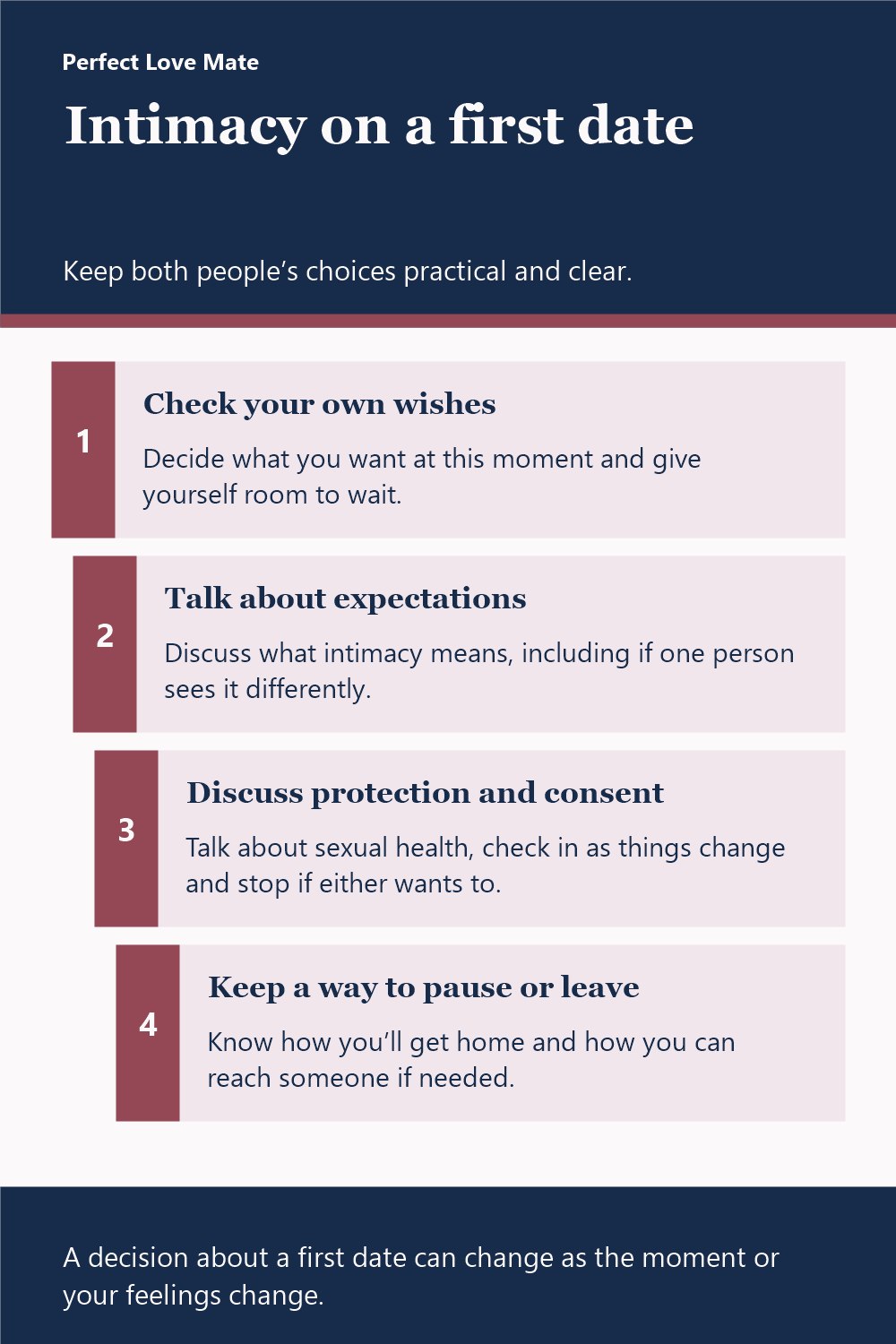
Read the infographic in text
Intimacy on a first date Keep both people’s choices practical and clear.
- Check your own wishes Decide what you want at this moment and give yourself room to wait.
- Talk about expectations Discuss what intimacy means, including if one person sees it differently.
- Discuss protection and consent Talk about sexual health, check in as things change and stop if either wants to.
- Keep a way to pause or leave Know how you’ll get home and how you can reach someone if needed.
A decision about a first date can change as the moment or your feelings change.