

You might describe a connection as a soulmate bond because it feels unusually meaningful. That language can help you reflect on what you value. It cannot tell you whether someone wants contact, shares your feelings or will return after a breakup.
If the connection starts taking over your attention, focus on what is happening today. Look at what both people have chosen, what you can change and what support you could use.
On this page
1. Separate the feeling from what you know
Try writing two short lines: “What I feel” and “What has been said or agreed.” You may feel certain the relationship mattered while knowing the other person asked for space. Both facts can inform your next step.
A dream, coincidence or reading can have personal meaning for you. Treat direct words and behavior as the information you need for shared decisions.
2. Keep contact mutual
If someone says no, asks you to stop or blocks you, respect that choice. Do not try another account, ask friends to pass messages or go to places to see them unexpectedly. A past relationship or strong feeling does not make new contact welcome.
If you share responsibilities, keep necessary communication to an agreed channel and topic where possible. Use that channel for the task, rather than reopening the relationship.
3. Interrupt the habit of checking for signs
Notice what prompts you to reread messages or check updates. You might mute a profile, put an old chat out of view or ask friends not to relay news. Use the time for a specific action such as calling someone, eating or going outside.
If you are waiting to meet someone you consider a soulmate, give other plans their own place in your calendar. Friendship and interests matter even when they do not lead to romance.
4. Get help if the thoughts or behavior feel hard to interrupt
Tell a trusted person what you want help doing: “I keep wanting to check their account. Could we talk or take a walk instead?” If the thoughts keep disrupting sleep, work or daily life, consider speaking with a qualified mental health professional.
If you think you may cross someone’s boundary, stop contact and ask for support managing the urge. You can take responsibility for your next action without shaming yourself for the feeling.
5. Take repeated unwanted contact seriously
If someone keeps following or contacting you and you feel unsafe, reach out to a local victim service or domestic abuse advocate for help planning what to do. The Stalking Prevention, Awareness, & Resource Center explains options for people experiencing stalking. If you are in immediate danger, contact local emergency services if you safely can.
You do not need to meet someone privately to explain a boundary again. Choose support and steps suited to your situation.
Read the infographic in text
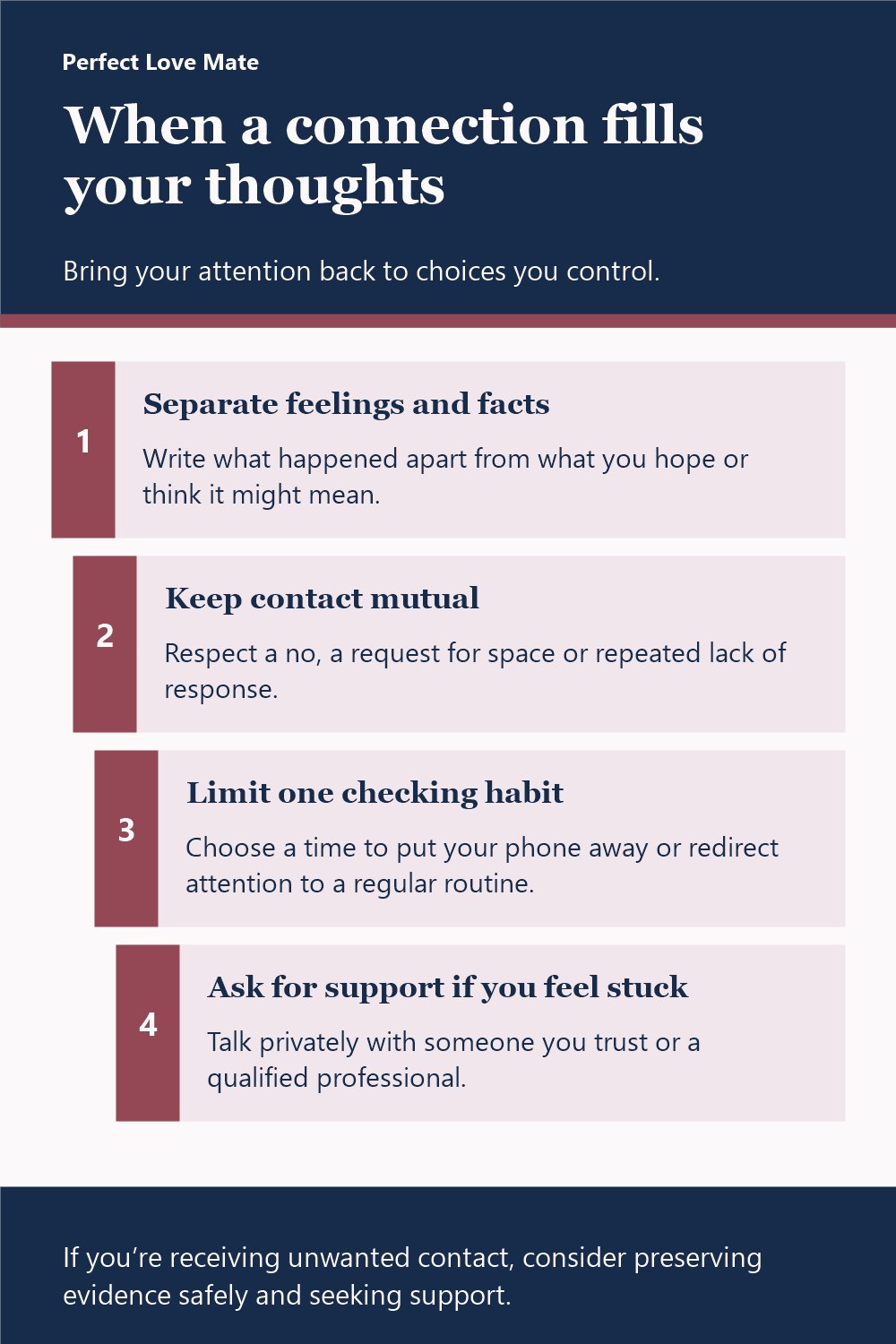
When a connection fills your thoughts Bring your attention back to choices you control.
- Separate feelings and facts Write what happened apart from what you hope or think it might mean.
- Keep contact mutual Respect a no, a request for space or repeated lack of response.
- Limit one checking habit Choose a time to put your phone away or redirect attention to a regular routine.
- Ask for support if you feel stuck Talk privately with someone you trust or a qualified professional.
If you’re receiving unwanted contact, consider preserving evidence safely and seeking support.